


 Fraud
FraudApril 22, 2026
How to Avoid a “Safe Account” Scam
Fraudsters have been scaring people into taking their savings out of their secure financial institutions (FI). The “Safe Account” scam continues to be an active threat. Fortunately, you can avoid this scam by staying informed and remembering some common red flags of fraud.
Here’s how the “Safe Account” Scam works:
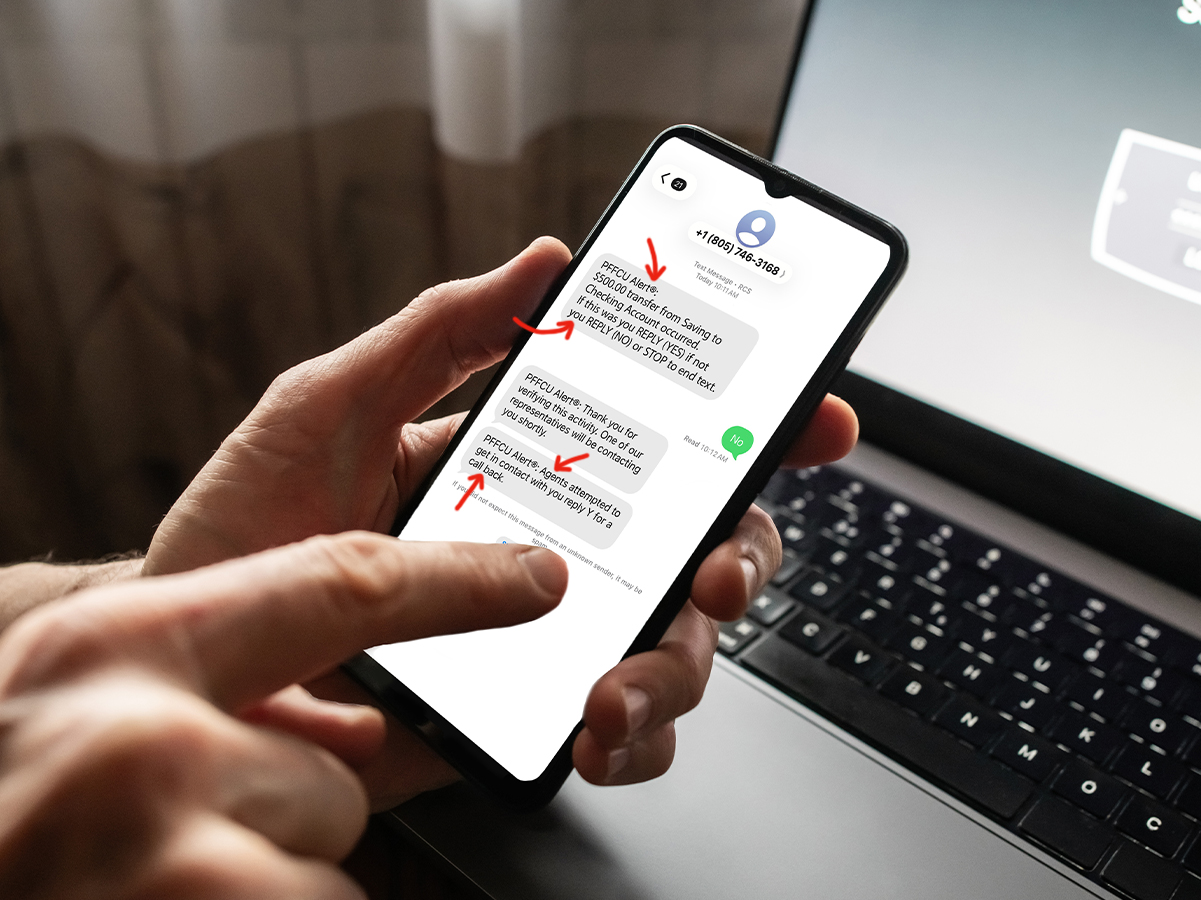
- Scammers may pretend to be from your financial institution’s fraud department or even a government agency. They can make their calls or emails look real using tricks that disguise their phone number or email address. This illegal technique is called ‘spoofing’ and can misrepresent them as a representative of a trusted agency or bank/credit union. Sometimes, they’ll mention details about your account like recent transactions to gain your trust. This information may have been stolen or gathered from previous interactions or by illegally accessing your email. The fraudsters may claim that you need to share the details of some recent transaction(s) to verify a delivery or some other time-sensitive event.
- They claim that your deposits are in danger. If the scammer pretends to be from your FI, then this scare tactic may involve ongoing attempts to hack your account or to charge large amounts on your card. If they claim to be a federal agent, then they may say that your FI is under investigation.
- They pressure you to move your savings to a government “safe account.” In reality, this account belongs to the scammers. There is no such thing as a government “safe account” to protect the deposits of your personal funds.
Watch for these red flags of a Safe Account Scam:
- Urgent Pressure: To prevent you from realizing what’s really going on, the fraudsters push you to act immediately and discourage you from stopping to think, ask questions or talk to someone you trust. They apply this pressure to keep you from any conversations, research, or second thoughts that may stop you from following their instructions.
- Unusual payment methods: Scammers often push for specific ways to send money, relying on payment methods that are hard to trace and nearly impossible to reverse, like wire transfers, cryptocurrency, cash transfer apps, and gift cards.
- Request for account access: Scammers might keep you engaged while guiding you through steps that let them steal your money. Sometimes, they’ll suggest downloading a so-called “security app,” which is actually malware that gives them control of your device and access to your financial logins and one-time codes. Another common move is coaching you through a funds transfer while convincing you to share your passwords or those single-use access codes for your account. Remember: PFFCU will never ask you for this confidential information.
- Telling you to lie: Scammers try to cut you off from anyone who might protect you from fraud. By posing as federal agents, they can claim their investigation is highly confidential. They’ll then give you a false story to tell your family or financial institution if they question why you’re withdrawing or moving money.
How to keep your deposits secure:
If you ever suspect that your accounts are at risk of fraud, contact your financial institution directly. Use a verified contact method to speak to a representative. Take the time to get confirmation and to look for any possible red flags; it could mean the difference between being a fraud victim and being a fraud-fighter. You can also set account alerts in Online/Mobile Banking. You can receive an alert anytime there is a transfer initiated and any time your account is debited. These alerts keep you updated on funds coming in and out of your account.